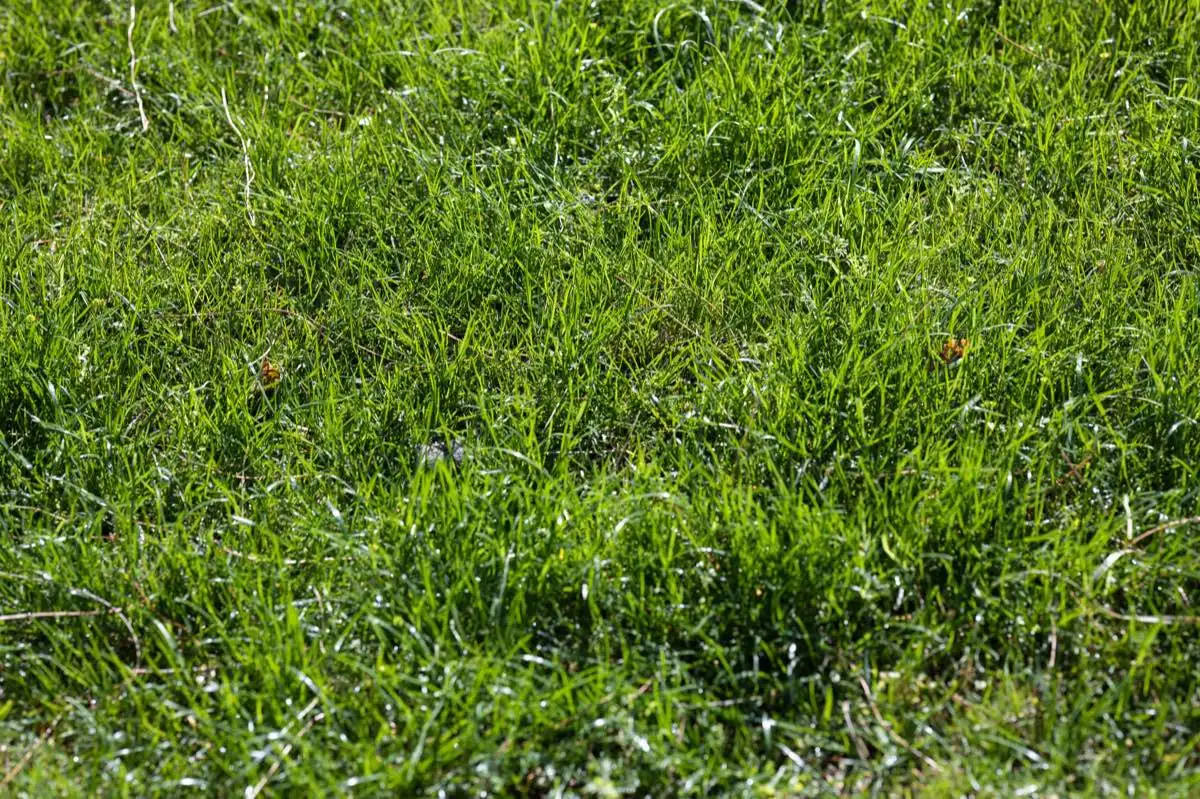
The mistakes that kill new sod are almost all in one of three places: the pallet sat too long, the soil underneath was never prepared, or the watering was wrong. Everything else on this list is a variation on those three.
Sod is a living thing with its roots cut off, and it has roughly a two-week window to reattach itself to the ground. Most of what follows is about not wasting that window.
1. Letting the pallet sit
The most expensive mistake and the most common one.
Sod is harvested with about an inch of soil, stacked warm and damp, and palletized. Inside that stack it heats and composts itself. In summer sod can be dead in 24 to 36 hours, with the top layer still green — which is how people install dead grass without knowing.
The fix: schedule delivery for the morning you are installing, not the day before. If sod arrives and cannot go down immediately, break the pallet apart, spread the pieces in a single layer in shade, and keep them damp. That buys you hours, not days.
If your delivery slips to Friday and you are laying on Sunday, do not lay it. Reschedule the delivery.
2. Skipping soil preparation
You cannot fix bad ground with good grass. Sod laid on compacted, unprepared soil roots two inches deep and then quits.
The tell is in the quote. Prep is a line item with a number beside it and grass is the part you can see, so when a bid comes back high the prep is what gets struck. Six weeks later the lawn is thin down the driveway side and nobody connects the two.
Our preparation guide walks the sequence step by step, grade rule and tilling depth included. What belongs on a mistakes list is the sizing: prep decides roughly 70 percent of whether the lawn takes, and it is the only stage you cannot redo later without lifting everything you paid for.
3. Laying sod over living grass
It does not root into grass. It roots into soil.
Sod laid over an existing lawn sits on dying vegetation that decomposes into a spongy, uneven surface, while every weed and Bermuda rhizome underneath works up through the seams. Within a season you have a lumpy lawn with the old lawn's weed problem.
4. Aligning the seams
Sod goes down like brickwork — staggered, so the end joints of one row land mid-piece in the next.
Aligned seams create straight channels that water runs along instead of soaking into, and the lawn stays visibly gridded for its first year. A two-second decision per piece that shows for months.
Two more seam rules: butt the pieces tight against each other without overlapping, and on any slope, run the rows across the slope rather than up and down it, then pin them with sod staples.
5. Not rolling it
After the last piece is down, roll it with a water-filled roller about a third full.
The purpose is contact. Sod laid on even a well-raked surface bridges over small hollows, and air pockets under sod are where the brown patches come from. Rolling presses everything into contact so roots can find soil.
Do not fill the roller. A heavy roller compacts the soil you just paid to loosen, which is the opposite of the goal.
6. Watering wrong, in both directions
Two mistakes sharing one label, arriving about three weeks apart.
Early: watering the grass instead of the ground. A cycle that wets the blades and stops is not a watering. Nothing drinks through the leaves — the roots are trying to grow down into whatever you prepared, and if that layer is dry they stop at the seam.
Later: never turning it down. Once the sod takes hold, the frequency that rescued it starts working against it. Waterlogged ground holds no air, and turf that never hunts for moisture never builds the depth to carry it through a bad August.
People get the second one wrong because both failures look identical from the driveway, so the instinct is to answer overwatering with more water. Our watering schedule has the day counts, the taper, and the screwdriver check that separates them.
7. Ignoring coverage gaps
The most common "my sod died" call turns out to be one strip that never got water — usually along a driveway or south-facing wall, where radiant heat off the concrete dries soil hours faster than the rest of the yard.
Test the irrigation before installation: tuna cans out, each zone fifteen minutes, see whether they fill evenly. Fix blocked and sunk heads then, while you can still reach them.
8. Mowing too soon, or too short
Too soon is the easy half: wait for the tug test our rooting guide describes, usually around day 10 to 14. Mow before that and you peel a corner up with the deck.
Too short is the half nobody names properly, because the standard advice — set the mower high — is only right for some lawns. UF/IFAS Gardening Solutions puts St. Augustine at 2.5 to 4 inches and bahiagrass at 3 to 4, but bermudagrass at 0.5 to 1.5 and zoysia at 1 to 3. The top setting on a rotary mower is about right for a St. Augustine yard and two to three inches too tall for a Bermuda one. Run Bermuda high all season, then drop the deck to spec, and you scalp it to stem in one pass.
Find the range for the variety you bought, set the deck once, and follow the rule that does hold for every grass: UF/IFAS says to mow often enough that no more than a third of the blade height comes off at a time. Taking more than that from turf still building roots sets it back weeks.
9. Fertilizing like it is an established lawn
New sod wants a starter fertilizer with phosphorus, which drives root development, worked into the soil before the sod goes down.
A high-nitrogen lawn fertilizer at install pushes leaf growth the roots cannot support and can burn already-stressed turf. Save the regular feeding program for six weeks out.
10. Walking on it
Two weeks. No kids, no dogs, no wheelbarrow shortcuts across the corner. Foot traffic on unrooted sod slides it out of contact and creates exactly the air pockets rolling was meant to eliminate.
This is the rule everybody breaks, because on day two it looks like a finished lawn. It is a green rug that has not yet decided to stay.
When you should install it yourself
We install sod, and we will still say this plainly.
A flat yard under about 2,000 square feet, on a mild day, with prep already done, is a genuine DIY job. Two people, a wheelbarrow, a sharp knife, a rented roller. The work is simple, just heavy — a pallet weighs 2,000 to 3,000 pounds and covers roughly 450 to 500 square feet, so count your pallets before you commit the weekend.
Hire it out when there is grading or drainage work, when the yard is big enough that installation would span two days (it must not), when access is bad, or when delivery timing is out of your control. The strongest argument for a crew is simply that they lay a whole pallet the day it arrives.
Corpus Christi Elite Sod & Turf lays sod in Corpus Christi and the Coastal Bend, and the rule we are most rigid about is the one at the top of this list: the pallet goes down the day it lands, or it is not ordered for that day. Behind it sit soil preparation, grading, and same-day installation. For pricing, see our sod installation cost guide.
Get a free quote → · call (855) 758-1291
Ready for a free quote in Corpus Christi?
Corpus Christi Elite Sod & Turf — free estimate, clear scope, no pressure. Use the form on this page or jump to the homepage quote.
Related services in Corpus Christi
Corpus Christi Elite Sod & Turf money pages — go straight to the service you need.
- Bermuda Sod →
Bermuda sod is the pick for a full-sun Corpus Christi lot, and it has a second advantage on this coast that nobody advertises: hybrid Bermuda carries better salt tolerance than St. Augustine, so it holds up closer to the water.
- Land Grading & Leveling →
Land grading and leveling is the part of a lawn nobody sees and everything depends on, and on a flat coastal city it is the difference between a yard that sheds a thunderstorm and a yard that keeps it. We laser-grade to a fall of roughly a quarter inch per foot away from the slab, fill the low spots, and cut a route for water to leave the property rather than sit on the grass.
- Sandy Soil & Topsoil Amendment →
Sandy soil and topsoil amendment is the make-or-break step on a Corpus Christi lawn, because the four inches under the grass decide almost everything and on this coast those four inches are either pure sand or unyielding clay. Sand drains instantly and holds neither water nor nutrients.
- St. Augustine Sod →
St. Augustine sod is the most planted lawn grass in Corpus Christi because it takes the humidity, holds a stand in the partial shade under a wind-sculpted live oak, and puts down a dense blue-green carpet that keeps weeds out.
- Seashore Paspalum Sod →
Seashore paspalum sod is the grass that works where nothing else will on the Corpus Christi coast — island lots, bayfront yards, Flour Bluff, anywhere salt spray or brackish irrigation water is killing turf faster than you can replace it. It is the most salt-tolerant warm-season turfgrass in commercial production, and it can be irrigated with water that would take St.
Frequently asked questions
Why is my new sod dying?
Nine times out of ten it is water — either not enough, or not reaching the soil beneath the sod. Push a screwdriver through the turf into the ground. If it stops at an inch, the roots are sitting on dry soil no matter how wet the blades look.
How long can sod sit on the pallet?
Install it the same day it arrives. Sod is harvested with about an inch of soil and stacked warm and damp, and the middle of a pallet begins composting itself. In summer heat, grass can be dead in 24 to 36 hours. This is the most expensive mistake on the list and the easiest to avoid.
Why are there gaps between my sod pieces?
Either the pieces were butted loosely at install, or the sod dried out and shrank before it rooted. Fill narrow gaps with a sand and topsoil mix and keep them damp. Gaps left open dry the exposed edges out and become permanent brown seams.
Do you have to roll new sod?
Yes, lightly. Rolling presses the sod into the soil so the roots make contact instead of bridging over air pockets. Use a water-filled roller about a third full — heavy rolling compacts the soil you just spent money loosening.
When can you walk on new sod?
About two weeks, or whenever it passes the tug test. Walking on unrooted sod slides it out of contact with the soil and creates air pockets, and those become the brown patches that show up a month later.
Can you lay sod over an existing lawn?
No. It will not root into living grass. The old turf dies underneath and rots into a spongy layer, the grade goes uneven, and every weed that was there comes back through the seams within a season.
Local context
How this applies in Corpus Christi, TX
Every article here is written from sod installation work done in Corpus Christi and the Coastal Bend, so the numbers reflect local labour, permit and material costs rather than a national average. Your own job can land either side of them depending on access, the condition of what is already there, and the materials you pick — SeaIsle 1 seashore paspalum, Platinum TE paspalum, Raleigh St. Augustine sod.
The way to turn any of this into a real answer is to have someone look at your actual situation. The free estimate is free, itemized and written down, with no deposit and no obligation. Call (855) 758-1291 or start on the Corpus Christi Elite Sod & Turf homepage.
Areas Corpus Christi Elite Sod & Turf covers
Corpus Christi first, then the surrounding communities of the Coastal Bend. Each has its own page with local detail rather than a copy of this one:
- Kingsville, TX — Kleberg County, population 25,402
- Portland, TX — San Patricio County, population 20,383
- Alice, TX — Jim Wells County, population 17,891
- Robstown, TX — Nueces County, population 10,143
- Rockport, TX — Aransas County, population 10,070
- Ingleside, TX — San Patricio County, population 9,519
Or jump to the full list of Corpus Christi services.
More from the Corpus Christi Elite Sod & Turf blog
- Buffalo Grass Sod Pros and Cons for Corpus Christi Lawns
Buffalo grass sod pros and cons in Corpus Christi, TX — the lowest-water lawn grass there is, and where Bermuda wins instead.
- How to Prepare a Yard for Sod in Corpus Christi (So It Roots)
How to prepare a yard for sod in Corpus Christi, TX — killing the old lawn, the grade rule, tilling depth, and the day-before checklist.
- Cost to Install Sod: Real Ranges for Corpus Christi Yards
Cost to install sod in Corpus Christi, TX — per-square-foot ranges, what changes the price, DIY vs pro, and when new sod is worth it over seed.
The Corpus Christi Elite Sod & Turf Team
sod installation specialists serving Corpus Christi, TX
Written by the Corpus Christi Elite Sod & Turf team — insured sod installation pros with 15+ years serving Corpus Christi, TX and the surrounding area.